Water cooler market churn is a hardware write-down, and POU fleets carry the bigger one
By Zenith Water Dispense Team ·
Primo Brands lost 17.4 million dollars disposing of fixed assets in 2025. A cancellation costs revenue and hardware, and the hardware bill varies by format.
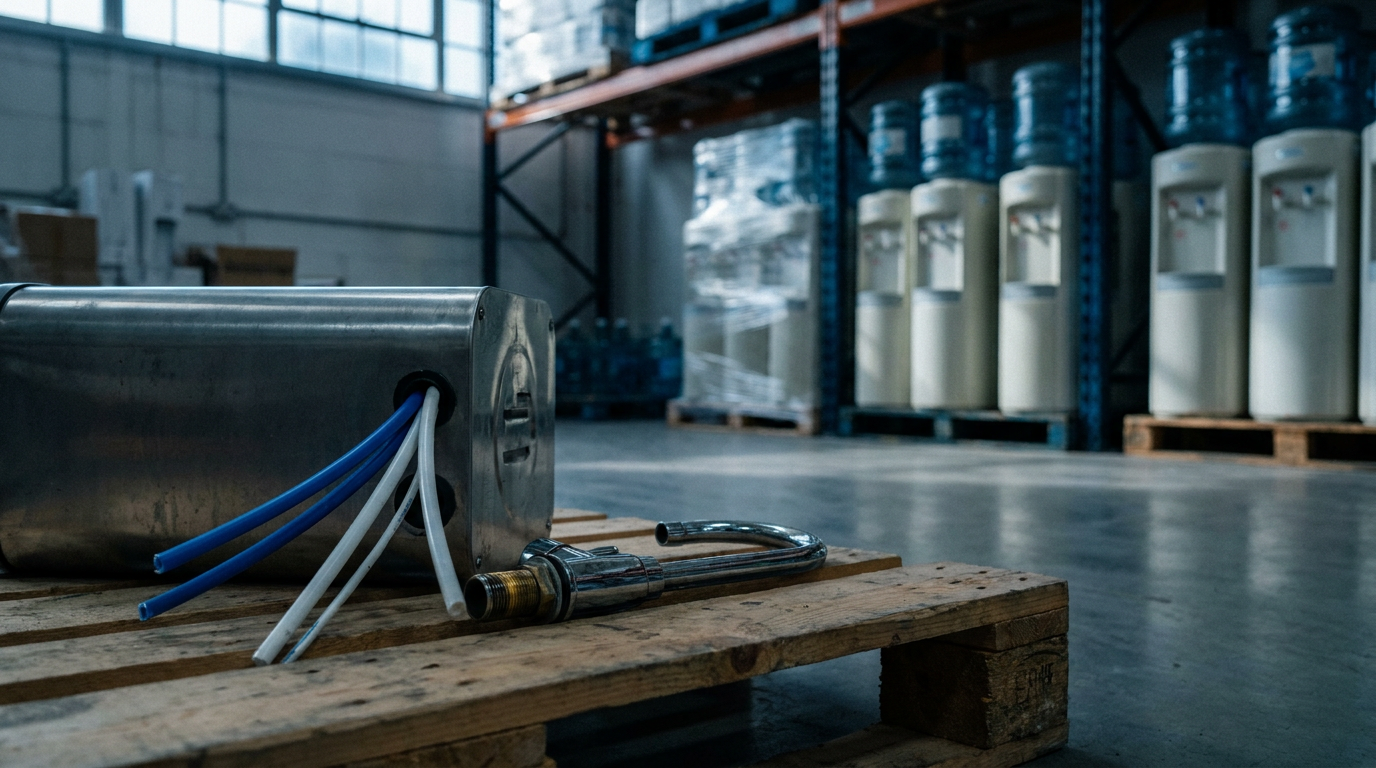
One line in Primo Brands' 2025 accounts changed how I read churn. It booked a 17.4 million dollar loss on disposing of fixed assets. I had counted cancellations as lost revenue. They are lost hardware too.
Primo Brands is the largest listed water dispense business in the world. Its 2025 full-year results, published on 26 February 2026, show net sales of 6.66 billion dollars. They also show 377.4 million dollars spent on property, plant and equipment. Under those headlines sits the disposal line.
A rental fleet is capital. Some of that capital leaves the business worth less than the books claimed.
A cancellation returns an asset, and nobody prices it
When a customer cancels, two things happen the same day. The invoice stops. A machine goes on a van. Operators report the first one every month. The second is handled as a logistics job.
This industry measures churn in percent with real discipline. It has no habit of measuring it in money.
What the returning machine is worth depends on what kind of machine it is. A bottled cooler, or BWD, simply unplugs. Two people lift it out, clean it, and it is ready for the next site. A mains-fed unit, which the trade calls POU or point of use, takes a feed pipe. A plumber has to fit it. ITS covers instant taps. The spout sits in the worktop and the works sit below. Taking those out needs a plumber. It leaves damage behind and returns a unit with cut pipework and trim shaped to somebody else's kitchen.
One public number, and almost no others
Primo's disposal loss is the only sizeable public figure in dispense that prices hardware leaving a fleet.
Private operators across Europe file accounts that bury the same event inside depreciation. None of them split it by format. A board needs one figure here. Which part of the fleet destroys capital when a customer leaves. That figure exists nowhere in the trade.
Where the percentage stops meaning anything
We model cancellation rates for thirty-one European markets next to the format mix in each one. Put the two together and the percentage stops being comparable.
Spain and Sweden cancel at almost the same rate. In Sweden, approaching nine in ten machines are plumbed, and a plumbed unit costs multiples of a cooler. In Spain, around one in ten is plumbed.
Per machine in the fleet, a Swedish year of cancellations risks close to twenty times more hardware value. A Spanish year risks a fraction of that.
Germany makes the point harder still.
Germany has the lowest cancellation rate in Europe, barely half the British rate. It still carries more hardware value at risk per machine than the UK.
Low churn in an expensive plumbed fleet is one thing. In a cheap bottled fleet it means something else.
Bottled goes back out at the same rent
This is where bottled dispense wins, and it wins cleanly. A returned cooler can be re-let to the next customer at the same monthly rental. The asset gets a second contract, then a third. Nothing about the first site was bespoke.
A removed instant tap has no such life. The next site has a different worktop, a different cabinet and a different specification. The unit goes into a refurbishment programme or into parts.
Bottled is the only dispense format whose asset re-lets at full price after a cancellation. That is worth real money wherever customers move.
One depreciation policy cannot fit three formats
Most operators run a single assumed life and a single residual value across the whole fleet. One assumption covers a cooler that will serve four customers. The same assumption covers a tap that serves one.
If the policy is right for bottled, it flatters the plumbed book. The gap turns up as a disposal loss years later.
Conversion plans sharpen it. Moving a customer from bottled to plumbed is sold as revenue per machine going up. It also moves the asset out of a format that recovers its value. The new format largely does not. That trade can still be the right one. It should be priced.
What this changes for buyers and boards
The plumbed share of Europe's fleet keeps rising, and so does the share that cannot be re-let cheaply. Buyers will see it first. A book with high churn and a bottled fleet has a revenue problem. A book with middling churn and a plumbed fleet has a capital problem. Capital problems get marked down harder.
Operators who put a money figure beside their churn figure can defend their price.
🧭 Weighing the same call in your own fleet?
Send us two or three lines on it. Enquiries we take on get an opening read. Where we would start, how big the job looks and the likely cost range.
P.S. Weighing a format switch in a market whose mix you cannot see? Europe runs to thirty-one countries in our set. Japan, Mexico, South Korea, Turkey and the UAE are there for projects that reach further. Units, revenue and prices are split by format inside every country file. Operators and their shares, the business and household split, revenue, and the run out to 2030. None of it is guesswork. Operators report to us directly, and local partners close the gaps. Take the Excel if you want to model it yourself. Ask for the written report if you need the argument. All of it sits inside the 2026 Zenith Water Dispense Market Reports. Built on the world's largest water dispense database. Put a number on your fleet