The more instant taps Europe installs, the less of that growth belongs to the water dispense trade
By Zenith Water Dispense Team ·
Europe's fastest growing dispense format is mostly bought once, for a home, from a kitchen brand. Fleet growth and contracted revenue growth have come apart.
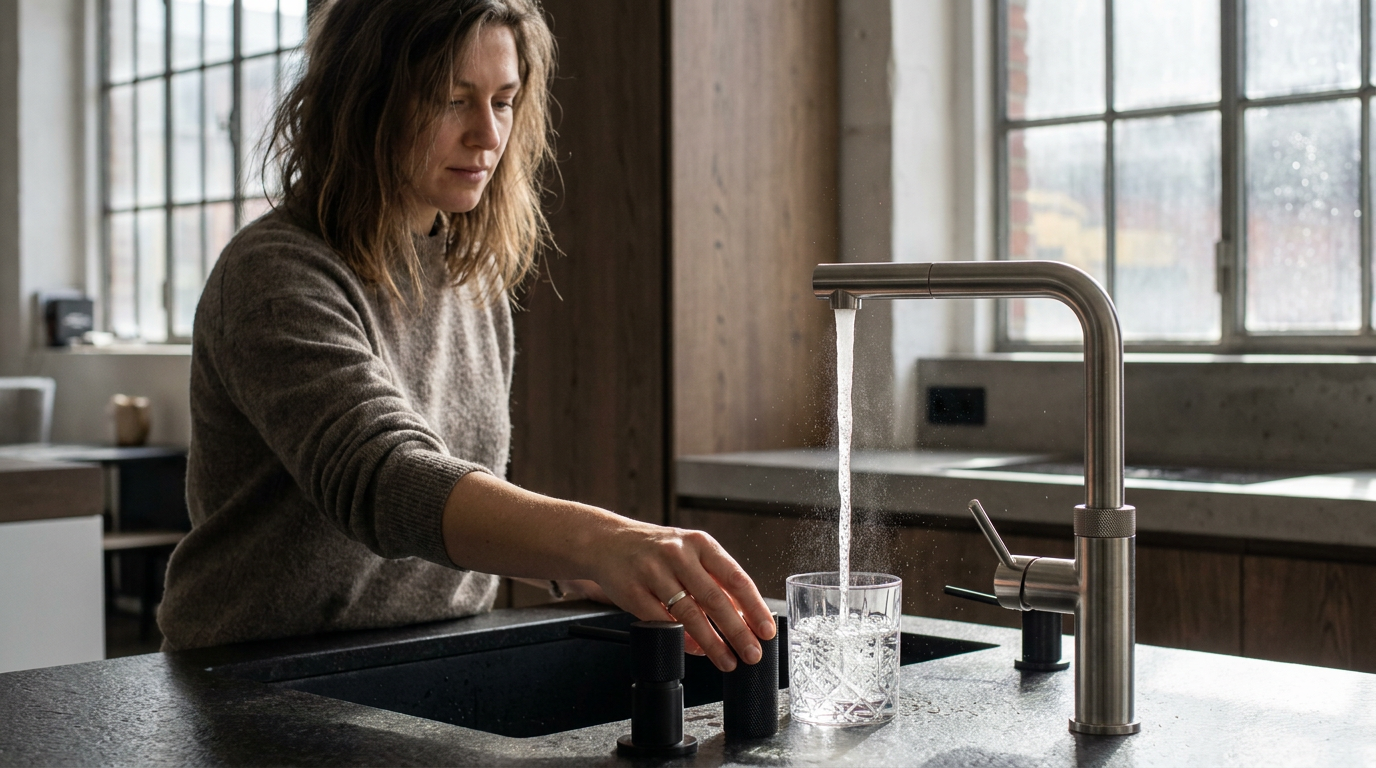
The trade reads fast tap growth as proof that water dispense is modernising. I read the same German numbers and see a kitchen product counted as a commercial one. Most of those taps go into homes, bought once and fitted by a plumber.
LIXIL owns GROHE. In the year to March 2026 its international water technology core earnings rose 31.2%, to 21.8 billion yen. European revenue there was up 4% and European core earnings up 15%. GROHE was named as a main driver of the result in its India, Middle East and Africa region. A sanitaryware group is earning well from the format dispense operators call their future.
Three formats share this market, and the buyer's decision separates them. Bottles delivered to the door, nineteen litres at a time, are the bottled water dispense format. A cooler fed by mains pipework for a monthly fee belongs to point of use. A fitter cuts one hole in the worktop, and the instant taps and sparkling format goes in. BWD, POU and ITS are how the trade abbreviates the three.
Kitchens are taking more of the growth than offices
Germany is the clearest case. Zenith's German model puts most of the leading tap brand's installed base inside homes. Workplaces take a much smaller slice of that same brand. Those units still sit inside the country's commercial dispense count. Part of what the trade calls workplace hydration growth is a domestic appliance market.
Who is actually selling the taps
Germany's instant tap supply list reads like a kitchen catalogue. Quooker and Grohe sit at the top of it. Rehau, Systemceram and Schock are on the same list. BRITA holds a real position, and Culligan and Borg & Overström each hold a slice. The biggest sellers of the fastest growing dispense format are sink and plumbing brands.
That supply shape decides how the money arrives. A kitchen studio quotes a tap, a plumber fits it, and the transaction closes. No route is created and no monthly line is opened. The buyer owns the hardware from day one. Whoever comes back to change the filter has to win that right separately.
Growth that never reaches the rental ledger
The water cooler market counts units, and units have stopped predicting revenue. German tap units have grown by more than half since 2019 in Zenith's model. German bottled units fell by around a fifth over a comparable stretch. A fleet can expand while a rental book shrinks. A tap sold through a studio bills once. A bottled account bills on every delivery. A plumbed-in rental charges the same fee each month. Fleet growth and contracted revenue growth stopped describing the same thing.
Bottled bills for something the customer can watch arrive
Bottled keeps one advantage the other two formats cannot copy. Its revenue is made by a visit the customer sees happen. A driver arrives, full bottles go in, empties come out, and the invoice follows a visible event. A tap or a plumbed cooler bills whether anyone attends or not. The customer watches bottled revenue being earned, one delivery at a time. That visit is a cost as well as a proof. A site with no storage space will still choose the worktop spout.
Split the growth before you price the book
Anyone pricing a dispense book in 2027 should split last year's growth in two. One part opened a line that renews. The other part was a sale that will not repeat. A unit count treats those two as the same asset, and they carry very different multiples. Operators selling taps can repair some of this at the point of install. Attaching a filter and sanitisation agreement to the hardware does most of the work. That turns a closed transaction into something a buyer can value.
📞 Put your install numbers on a call
Bring last year's installs and we will sort them into two piles. One pile opened a renewable line and the other closed on the day. Half an hour is usually enough to see what that does to a valuation.
P.S. A fleet can grow all year and leave the recurring revenue flat. There is a rented-versus-sold line for every country in the 2026 Zenith Water Dispense Market Reports. Count the European files and you reach thirty-one. The same template runs for Turkey, Japan, the UAE, Mexico and South Korea. Business demand and home demand never share a line. Pricing, shares and unit counts sit on one timeline to 2030. Whether you take the workbook alone or add the commentary is your call. Built on the world's largest water dispense database. → Check what your growth is worth