Britain's gyms took 679 million visits. The water cooler market is barely in the building.
By Zenith Water Dispense Team ·
A vending trade report on 9 September set out why gyms, cinemas and leisure centres are buying self-service. Water dispense operators sell the same thing and hold almost none of that channel. Zenith's fleet data puts leisure in low single digits in every large Western European market, and the reason is a margin conflict nobody in the trade names.
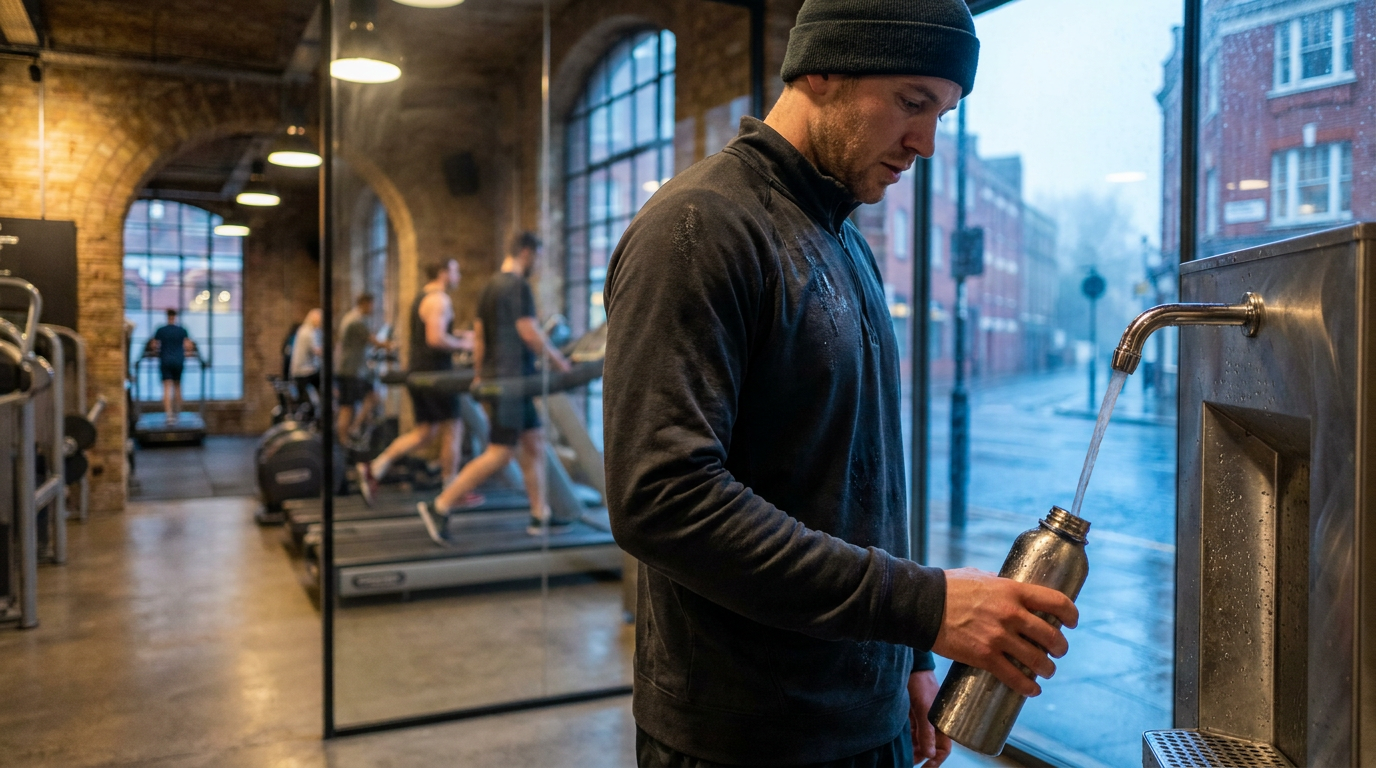
British gyms recorded 679 million visits last year, nearly double the number of GP appointments. A vending trade report on 9 September laid out why leisure venues are signing self-service contracts. Water dispense operators sell the same workload relief and hold almost none of the channel. Zenith's fleet data shows why, and the reason is commercial rather than logistical.
I keep seeing the same blind spot. Operators tell me leisure sites are too small and too awkward to route. They then spend the same week chasing an office of forty desks. British gyms took 679 million visits last year.
That figure comes from the UK Health & Fitness Market Report 2026, published by ukactive in April. It is nearly double the 383 million GP appointments recorded over the same period. Britain's gyms now see more visits than its doctors. The water cooler market treats them as a rounding error.
Where the thirst actually is
The same report counts 5,842 health and fitness clubs in the UK, up 4.2% since 2024. A record 12.2 million people over 16 hold a membership. Penetration has reached 18% of adults, from 14.6% in 2022.
Sector income rose to £6.5bn from £5.7bn a year earlier. Seven mergers and acquisitions were recorded in twelve months.
Commercial impact: site counts and footfall are both rising. Buyers are getting large enough to sign national contracts. A gym is the one site type where every visitor arrives thirsty by design.
What the vending trade just worked out
Refreshment published a report on leisure self-service on 9 September. It is worth reading because the argument it makes is about service rather than product.
Selecta UK's Andrew Jones said a managed service stops venue staff restocking and maintaining equipment. Connect Vending's Elyas Coutts pointed out that most gyms run 24 hours. A machine there earns for longer than one in a cinema. VendEase's Dave Berman described leisure demand arriving in waves.
Selecta already runs this at scale. Its work with The Gym Group covers more than 245 sites. Towels, padlocks and class booking codes sit on a touchscreen.
Commercial impact: the venue is buying workload relief and a facility that works out of hours. Water dispense operators sell exactly that, and they are letting a vending company own the conversation.
Our fleet data says the channel is nearly empty
Zenith's country models split every fleet by vertical. Leisure sits in low single digits of both the bottled and the mains-fed base. That holds in every large Western European market. Mains-fed units are known in the trade as POU, or point of use.
In Germany, the mains-fed base holds several times more units in schools and hospitals than in leisure sites. In France, the leisure line for instant tap systems is empty. Germany is the one large market where instant taps reach a noticeable leisure share.
We can see this because operators submit their own unit counts to us each year. Local data partners fill the gaps. Schools and hospitals buy mains-fed water at scale. Gyms, with far more footfall per square metre, do not.
The reason nobody in the trade says out loud
Look at the venue's profit and loss. A gym sells bottled water, electrolyte drinks and protein shakes at retail margin. The Gym Group machines carry Vitamin Well and Nocco alongside the accessories.
A free mains-fed tap takes volume straight off that line. In an office, the employer pays for hydration as a staff benefit. In a gym, hydration is a product the venue is already selling. That one difference explains the vertical split better than route economics ever will.
Commercial impact: pitching a gym on free water is pitching against its own till. The offer has to be built differently.
Where bottled coolers still fit
Bottled dispense holds real ground in leisure, and it deserves saying plainly. Poolsides, ice rinks and outdoor courts are expensive places to run a new water line. A bottled unit needs no plumbing and moves when a space is reconfigured.
Seasonal sites are the clearest case. An outdoor pool can take units for a season and hand them back. No mains-fed install works that way.
Mains-fed has the edge on high-throughput indoor sites. A 24-hour gym empties bottles faster than a fortnightly round can serve. That is a scheduling reality, and it says nothing about whether the format works. Both formats have a place in the same building.
How the leisure sale actually works
Price on throughput instead of headcount. A gym has no desk count. It has visits, and there is now a national figure to benchmark against.
Sell retention and duty of care. Operators already sell hygiene credentials into healthcare. A gym carries the same argument with a younger, louder membership.
Then go where the margin conflict does not exist. Council leisure centres, swimming lesson programmes and school holiday schemes run on a public health remit. Free drinking water helps them.
Where the conflict does exist, sell alongside the vending contract. A member who fills a bottle still buys the protein bar. The tap and the machine sell to the same person at different moments.
What to watch
Watch the work-from-gym shift. The ukactive report describes clubs becoming hubs, with recovery services, social space and desk options. Once a gym holds people for a working day, its water spec looks like an office spec.
Watch the buyers. Seven fitness deals in a year means fewer and larger operators. A single national contract becomes possible where it was not before.
For investors, add one line to diligence. Ask for revenue per litre by vertical instead of revenue per unit. A leisure site looks poor on a rental table and strong on a volume table. Only one of those tells you what the account is worth.
🎯 This is the thinking we bring to client projects.
If today's topic touches a decision on your desk this quarter, start the conversation before the window closes.
P.S. Trying to work out which verticals actually carry your fleet, market by market? The 2026 Zenith Water Dispense Market Reports cover 30+ markets, every West and East European market plus Japan, Turkey, UAE, South Korea and Mexico on request. Each one is a full bottled, mains-fed and instant tap model: operators and shares, channel and vertical splits, revenue, and the outlook to 2030. Built from direct interviews with local operators and data partnerships in every market we cover. Excel, with the written report on request: https://waterdispenseinsights.com/reports