Gen Z makes 39% more drinks visits than its share. What that means for the water cooler market
By Zenith Water Dispense Team ·
New Circana data across Europe's five biggest foodservice markets shows visits falling while bills rise. Underneath that calm, the age split is severe. For water dispense operators, the people who will stand at the machine in five years drink differently from the ones standing there now.
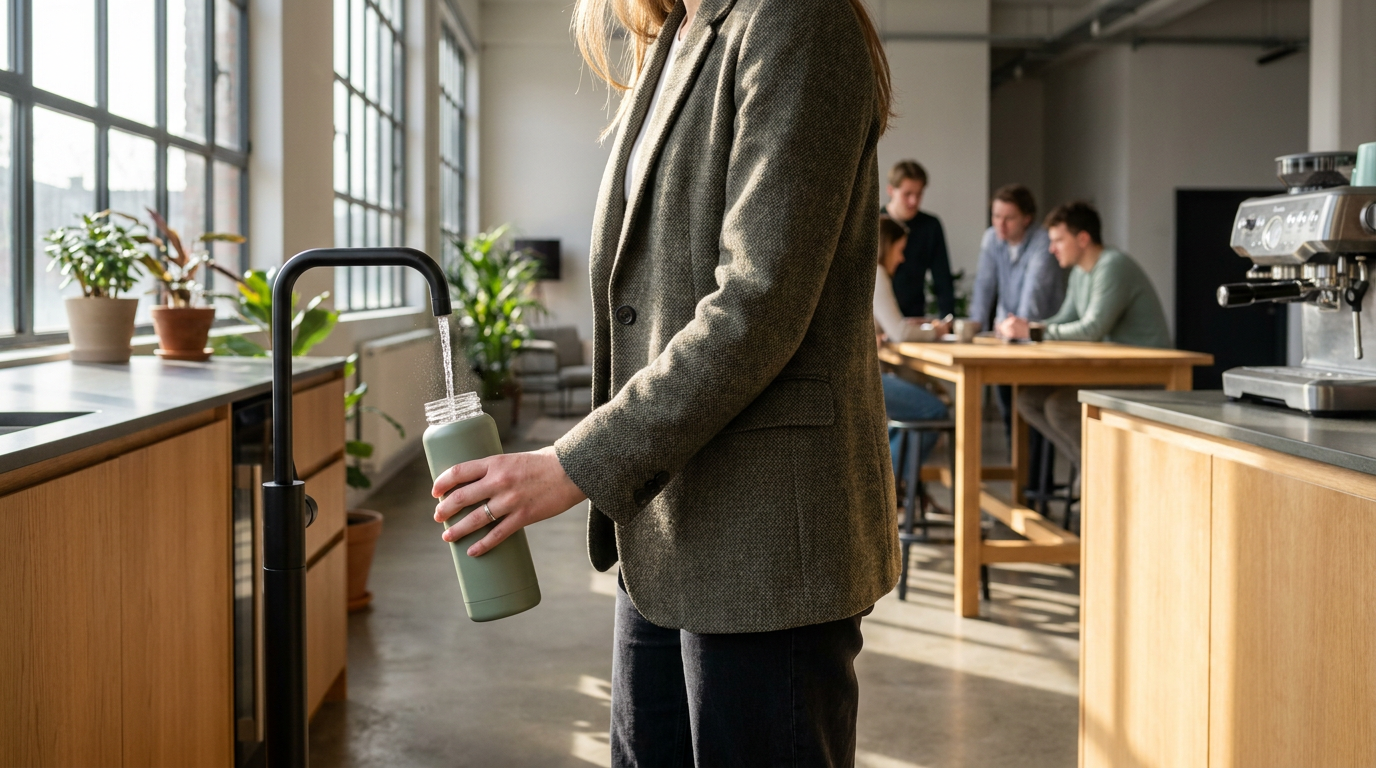
I have one standing question for the boards I sit in front of. Who will be standing at your machine in five years, and does it pour what they drink? Circana has now put a number on the answer.
The firm tracks foodservice across Great Britain, Germany, France, Spain and Italy. Annual spend in those five markets is €361.2 billion. Spend rose 1.4% while visits fell 0.7%. The average bill went up 2.1%. Read on its own, that is a quiet year.
A flat headline sitting on a moving middle
The calm goes as soon as you split the number by age. Gen Z makes 39% more foodservice visits than its share of the population predicts. Millennials and Gen X also run above their weight. Baby Boomers are 29% of Europe's population and index at 60.
Branded concepts show the same split. They take 29% of commercial restaurant spend overall. Among Gen Z and Millennials that rises to 35%. Among Baby Boomers it is 16%. Two customers are hiding inside one flat market, and they are moving apart.
Thirteen per cent of one group has left coffee
Circana also asked about habits. 12% of Gen Z practise intermittent fasting, against 7% of the population. 24% look for high protein. 20% want organic or natural. And 13% of Gen Z avoid coffee altogether.
That last figure should worry anyone selling workplace hydration. Office refreshment contracts are still written hot drinks first. The coffee machine is the anchor and water is the add-on. A group where one in eight skips coffee will price that contract differently.
Plumb a cooler into the mains and you have POU, point of use. It filters the supply already in the building. ITS stands for instant taps, the counter unit giving boiling, chilled or fizzy on demand. Taps sell on cold and fizzy. Europe held more than 6.6 million dispense machines last year on Zenith's published count. Those machines earned above €2.5 billion in 2025. Of the three formats, taps climbed quickest.
Solo drinking is now the normal occasion
Almost 60% of foodservice occasions involve one or two people. Solo visits make up a third of main meals. Millennials spend roughly 70% more on a solo visit than on a shared one. The group moment is shrinking and the single one is paying more.
Dispense economics were built on the other assumption. One machine serves a floor, and draw per unit pays for the route. Individual, mobile drinking pushes value towards the bottle a person fills and carries. That favours chilled and sparkling at the tap over a kettle point.
Bottled moves when the floor plan does
The returnable-bottle format goes by BWD in the trade. A 15 or 19 litre bottle sits on top of the cooler and goes back empty. It holds an advantage that format comparisons keep ignoring. A bottled unit can be picked up and set down somewhere else for nothing. No plumber, no core drill, no landlord consent, no making good afterwards.
That counts for more as offices change shape. Younger workforces sit in flexible space on shorter leases. Floors get reorganised and desks get pooled. A plumbed tap stays where the pipe was run. Bottled follows the people, and the people move more often now.
Zenith's own models show where that logic bites hardest. Look at the European market where households buy more dispense than offices do. Bottled still holds close to nine units in ten there. Mains-fed rental there has barely moved in a decade. What the customer buys is convenience, and plumbing does not supply it.
What to put in next year's spec
The coffee contract survives this. What changes is the weighting inside it. The line that grows is cold and carbonated, and nobody has to ask for it.
For operators, the practical move is to stop selling one workplace package into every site. Ask the client for the age profile of the building. A young office and an old office are two different specifications, and they should carry two different prices.
Investors should carry this into diligence. A hot-drinks-heavy fleet in a young-workforce sector carries demand risk nobody has priced. Ask which part of the recurring revenue depends on a habit that is thinning.
Circana will publish this read again next year, and the split will be wider. Whoever reads it first gets to write the spec.
📈 Want the numbers behind the format shift?
Water Dispense Insights keeps a free resource pack on the three dispense formats in Europe. Take it and see where your own market sits.
P.S. Planning a spec for a workforce you have never profiled? That is what the 2026 Zenith Water Dispense Market Reports are for, across more than thirty countries. Every market is modelled one unit at a time, with the three formats kept apart. Operator rankings, revenue and a projection reaching 2030 all sit in the model. Home customers and workplace customers are counted on separate lines. Coverage runs to every market in Europe. Ask and five more open up outside it: Japan, South Korea, UAE, Mexico and Turkey. The model arrives as a workbook you can open and work in. Request the write-up and that comes too. Trusted by industry leaders since 1998. Look up your market.