France drops its bottle deposit, and the water cooler market is reading it wrong
By Zenith Water Dispense Team ·
France confirmed on 4 September that it will not impose a national deposit on plastic drinks bottles. The trade is reading that as relief for packaged water. The EU rule underneath says the deposit still lands by 2029, and the exemption test is measured on a year that is nearly over.
Most of the trade will read this as a win for packaged water. I land somewhere else. The deposit is still coming. It will just arrive late, and on worse terms.
France's environment ministry confirmed on 4 September that there will be no national deposit on plastic drinks bottles. Towns and cities can run voluntary local schemes instead. The decision followed a three-month consultation with municipalities, drinks companies and recyclers.
What France actually decided
A deposit-return system, or DRS, adds a small refundable charge to a drinks container at the till. You get it back when you hand in the empty. France had planned one nationally.
Local authority groups fought it hard. Their argument was simple. A deposit pulls clean PET, the plastic used in drinks bottles, out of council recycling streams. Councils keep paying for the bins either way.
They won. France now has no national plan to collect the bottles it is legally required to collect.
The number that makes this temporary
ADEME is the French environment agency. It puts the drinks bottle collection rate at 56.8% for 2023. Its provisional figure for 2024 is 58.2%. France's own circular economy law, AGEC, set 77% for 2025 and 90% for 2029.
Now read the EU rule next to it. Article 50 of the Packaging and Packaging Waste Regulation, or PPWR, sets the deadline. By 1 January 2029 member states must collect 90% of single-use plastic drinks bottles up to three litres. To get there, they have to run a deposit-return system.
There is one way out. A country that collected 80% or more in calendar year 2026 can apply for an exemption. The plan has to be filed by 1 January 2028.
France is around twenty points short, and the year being measured is this one. Four months of it remain. No policy can close that gap now.
France kept the obligation and gave up the design
So the cost does not disappear. It moves, and it moves out of French hands. A scheme written to a Brussels deadline will be less generous than one designed in Paris.
Operators, bottlers and retailers face the same bill in 2029 with less say over its shape. That is a planning problem, and it starts now.
Voluntary and local is harder for the buyer
Look at this from the customer's side. A French employer with sites in twelve towns may now meet twelve different rules. Some towns will run a scheme. Most will not.
Facilities contracts are signed nationally and priced nationally. A patchwork is harder to administer than a single national rule, even when the patchwork costs less. That is a selling point for anyone who sells one contract and one price across a country.
The reprieve went to dispense's real competitor
Here is the part the headlines miss. A deposit applies to single-use containers up to three litres. The 19-litre returnable cooler bottle is not single-use and sits outside it. Neither bottled coolers nor mains-fed taps were ever the target.
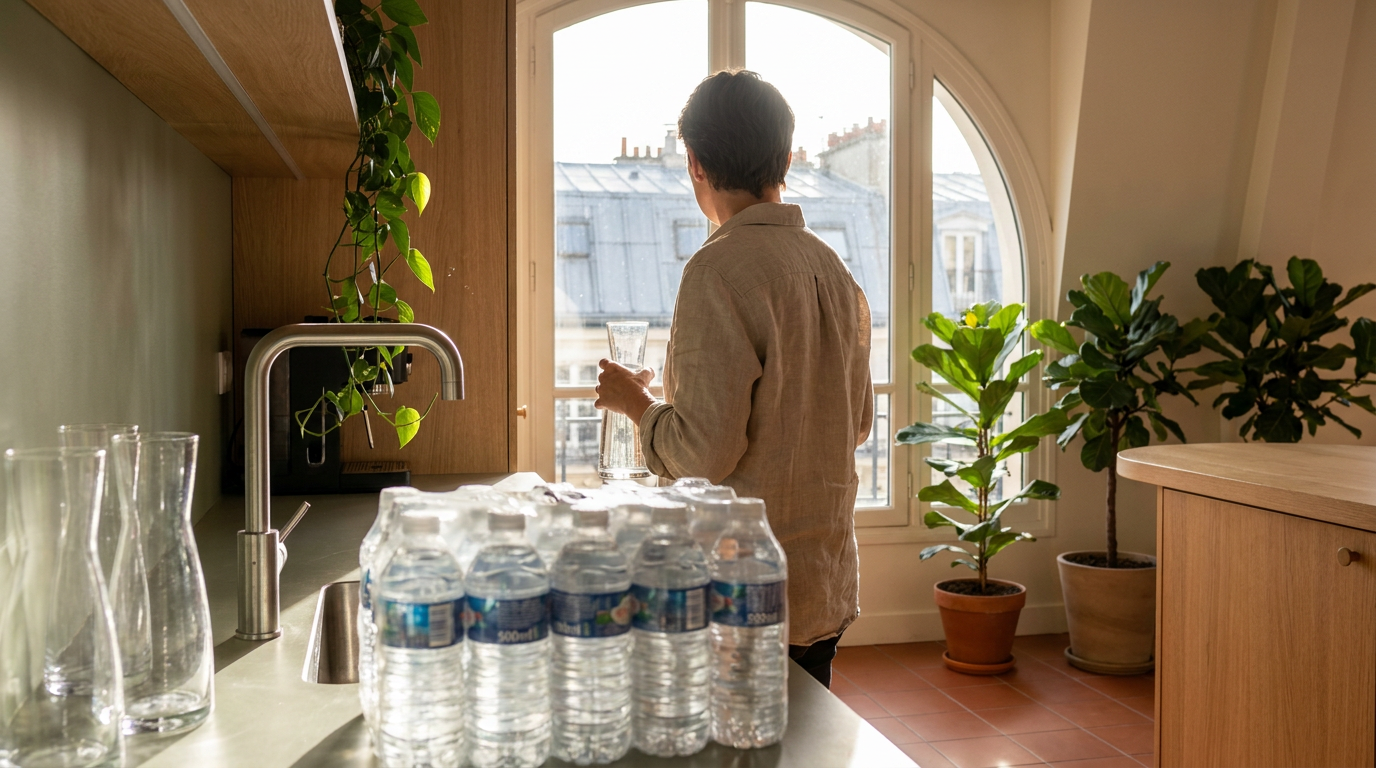
The target was the case of 500ml bottles in the office kitchen. That is what most water dispense operators are actually selling against. France just handed that competitor a three-year reprieve, and nothing more.
Dispense already runs the system France would not build
One more thing is worth sitting with. The French state spent three months deciding that national return infrastructure was too costly to impose.
Bottled water dispense operators have run exactly that for decades. Bottles go out full and come back empty. They are washed and refilled. Return rates sit close to total because the container is the operator's asset.
The industry built a working deposit-return system at its own cost and has never priced it as one. In a market about to spend three years arguing over collection rates, that is an asset worth naming.
What operators in France should do now
France is the most mains-fed of the large markets in our Western European set. Point of use, or POU, means a dispenser plumbed straight into the mains. Around a quarter of the French installed base is still bottled. That share slips by low single digits each year.
Our numbers come from operators submitting their own unit counts, and from local data partners in each market.
Note what did not change this week. The switching case in France never rested on the deposit. It rested on cost per employee, on PFAS in the tap supply, and on floor space. Any pitch built on a deposit that was coming needs rewriting this month.
Bottled dispense comes out of this fine, and it is worth saying plainly. The 19-litre format was never in scope. On rural sites, on construction jobs and where the mains is poor, it is still the only answer. Its route density is also the thing that makes the sparkling and consumable business work.
For buyers and investors the point is narrower. Price a French packaged-water business as if the deposit has gone. You have valued a 2029 cliff at zero. Underwrite a French dispense book on a regulatory tailwind, and you have lost an assumption. Both models need a new line by the end of this quarter.
📊 See how the rules land market by market
Packaging rules now move at a different speed in every country. The 2026 Zenith Water Dispense Market Reports show what is installed, who owns it and where each market is heading, across 30+ markets.
P.S. Pricing a rule change in a market you do not model? The 2026 Zenith Water Dispense Market Reports cover 30+ markets, every West and East European market plus Japan, Turkey, UAE, South Korea and Mexico on request. Each one is a full bottled, mains-fed and instant tap model: operators and shares, the B2C and B2B split, revenue and a 2019 to 2030 outlook, in Excel with the written report on request. Built on the world's largest water dispense database. https://waterdispenseinsights.com/reports